
 Fireproof
 Break-resistant
 Fire and burglary resistant
 For storing weapons
 Depositary
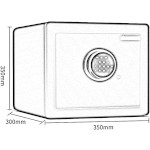 Furniture
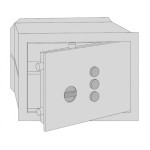 Built into the wall
 Cabinets are fire resistant
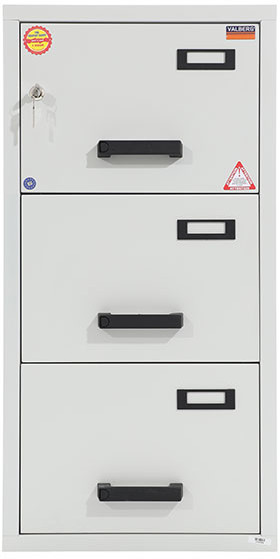 Fireproof filing cabinets
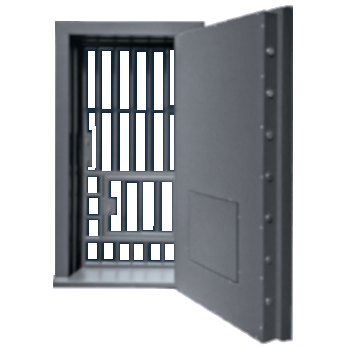 Doors of bank vaults
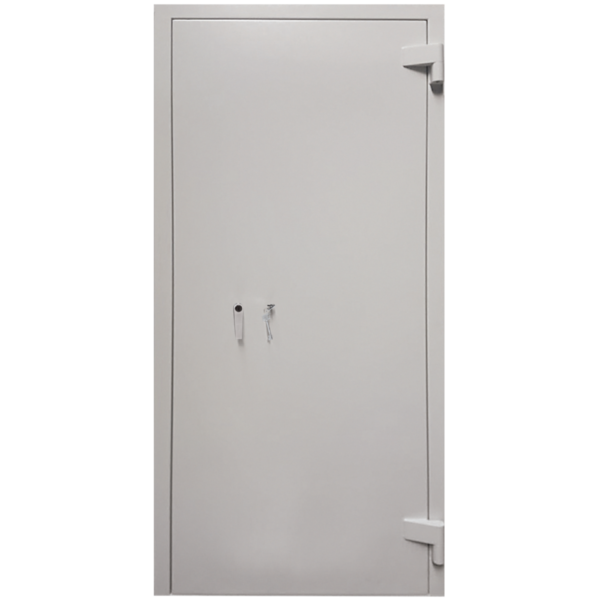 Doors for shelter, armory rooms
 Українська
When choosing a safe for home or business, metal thickness and appearance are not the main indicators of reliability. A key criterion, which you need to pay attention to is the burglary resistance class. It is determined during strict laboratory tests and certified according to European standards (example, EN 1143-1).
In this article, we will take a detailed look at the burglary resistance classes of safes from I to VI, so that you can understand clearly, what exactly are you paying for and what level of protection is required for your tasks.
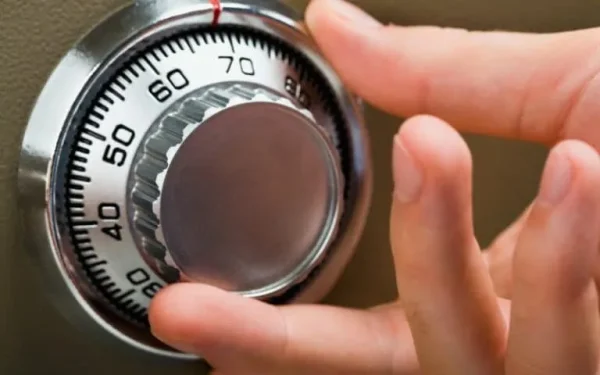
How the burglary resistance class is determined?
During certification, safes are tested by professional "safecrackers". They use a full arsenal of tools: from simple crowbars and drills to thermal cutters, angle grinders and diamond drills.
The class is assigned based on so-called resistance units (RU – Resistance Units). The more time and more complex tools are needed to get full or partial access inside, the higher the class gets the safe.
Important. Any safe can be hacked. The only question is that, how long it will take the attacker and what level of noise he will create. A high-class safe makes quick and quiet hacking a priori impossible.
Gradation of classes and recommendations for selection
To make the choice easier, experts divide safes into categories depending on the value of the property, what will be stored in them, and the approximate weight of the structure itself.
Class I (1 class) - basic protection
The most popular option for home use and small offices. The thickness of the walls is usually approx 10-20 mm, and between the steel sheets there is a layer of concrete. The approximate weight of such models varies from 40 to 150 kg.
- Scope of use. Private houses, apartments, managers' offices.
- What is recommended to store. Personal documents, family heirlooms and sums equivalent to $10 000.
- Protection. Designed to counter a random or unprepared thief with simple tools at hand.
Class II (2 class) - enhanced protection
It has a significantly reinforced construction of walls and doors, and is also equipped with more reliable class A or B locks. The weight of such a safe is noticeably greater - from 100 to 300 kg, and special reinforcing elements are used in the concrete layer.
- Scope of use. Company offices, currency exchange points with low turnover, private houses.
- What is recommended to store. Important statutory documents of the company, Securities, moderate value jewelry and cash to $30 000.
Class III (3 class) - high level of security
These safes are designed to protect serious valuables. The walls are filled with high-strength composite concrete with the addition of corundum or granite chips, which makes fast sawing impossible even with a professional grinder. The weight of such structures is usually from 200 to 600 kg.
- Scope of use. Jewelry stores, cash registers of enterprises, medical institutions.
- What is recommended to store. Large amounts of cash (to $100 000), expensive jewelry collections, as well as psychotropic or narcotic substances according to medical requirements.
Class IV (4 class) – professional banking protection
The category of professional equipment begins with this class. The lock zone is protected from drilling and knocking out by special ultra-hard plates. The structure must be equipped with a locking system (block-bolts), which firmly jams the bolts when attempting a mechanical blow to the lock. Weight starts from 500 kg.
- Scope of use. Bank branches, large financial companies.
- What is recommended to store. Bank assets, gold bars, especially valuable pledges.
Class V and VI (5 and 6 classes) - the maximum limit
The highest level of protection, available on the civilian market. These are massive structures weighing from several hundred kilograms to several tons. The walls have a multi-layered structure made of unique high-strength alloys and reinforced fiber concrete.
- Scope of use. Central storage of banks, State institutions.
- What is recommended to store. State secrets, world-class historical values, huge cash funds.
Choosing a safe, always look for an internal certificate (metal nameplate) on the back of the door. Its presence guarantees, that the model has passed real tool tests, and isn't just painted to look like a "secure vault".